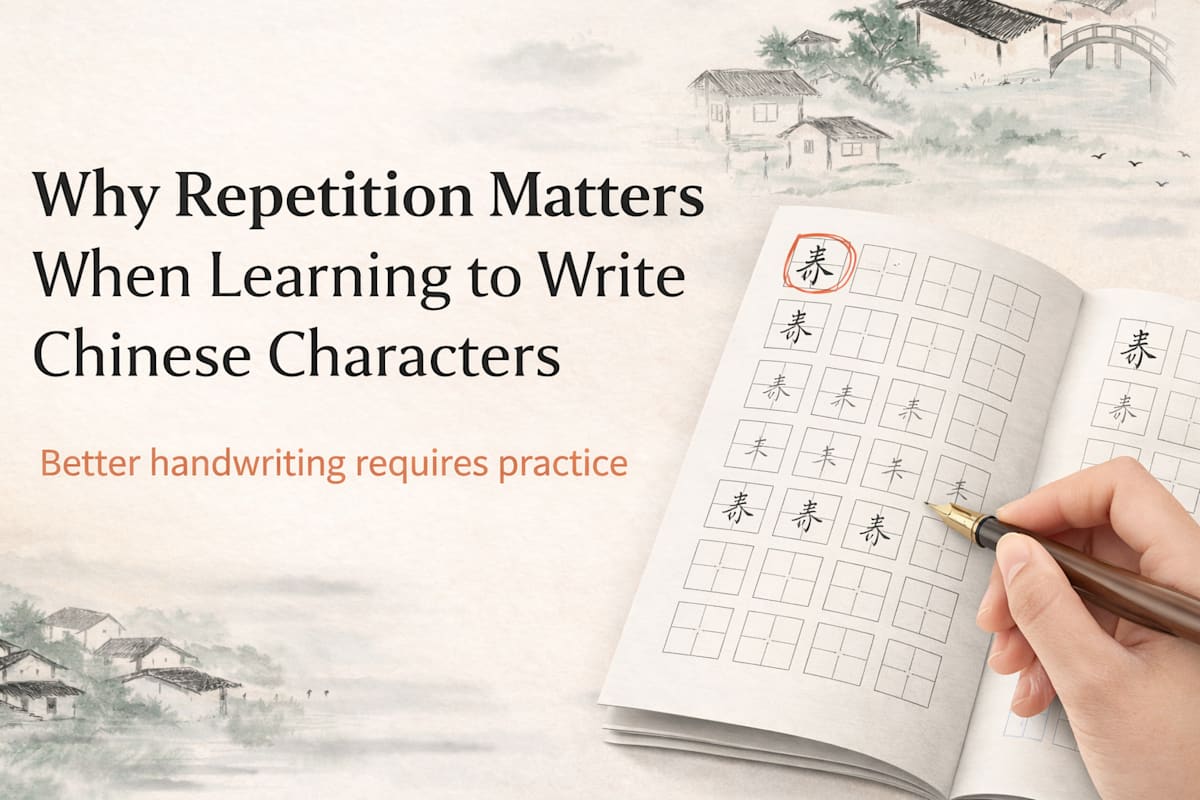
Learning to write Chinese characters is often described as a memory challenge. But for many learners, the real difficulty isn’t remembering characters — it’s writing them consistently.
Characters may look acceptable one day and messy the next. Strokes drift, spacing changes, and confidence drops. This is where repetition plays a critical role, not as mindless copying, but as structured reinforcement.
Writing Chinese characters is a physical skill
Chinese handwriting is not purely a visual or intellectual task. It’s a physical skill that relies on muscle memory, coordination, and spatial awareness.
Each time you write a character, your hand learns:
- How much space the character occupies
- How strokes relate to one another
- How pressure and movement affect balance
Without repetition, these patterns never fully settle.
Why repetition feels frustrating for many learners
Repetition often gets a bad reputation because it’s commonly done without structure. Writing the same character over and over on blank paper can feel tiring and unproductive.
Common problems include:
- Losing consistency across repetitions
- Speed increasing while accuracy drops
- No clear way to see improvement
When repetition lacks visual feedback, it’s easy to reinforce mistakes instead of correcting them.
Structured repetition changes the experience
When repetition is paired with a consistent writing format, it becomes much more effective.
A structured practice layout:
- Keeps characters aligned
- Makes spacing differences visible
- Encourages slower, more intentional writing
- Helps errors stand out immediately
Instead of guessing whether a character looks “right,” you can see what’s working and what isn’t.
How many times should you repeat a character?
There’s no universal number, but most learners benefit from focused repetition rather than volume.
A practical approach:
- Choose one character
- Write it slowly several times
- Focus on keeping size and placement consistent
- Stop once fatigue or loss of focus begins
The goal is not to fill the page — it’s to stabilize the character’s shape.
Repetition builds confidence, not just accuracy
One overlooked benefit of repetition is confidence. When your hand begins to move more naturally, writing feels calmer and more controlled.
Signs repetition is working:
- Less hesitation before starting a character
- More consistent spacing across rows
- Fewer corrections or restarts
- A steadier writing rhythm
Confidence grows when writing stops feeling uncertain.
Making repetition part of a sustainable routine
Short, regular practice sessions are far more effective than long, infrequent ones. Even 10 minutes a day can lead to noticeable improvement when repetition is consistent.
Many learners find it helpful to:
- Practice at the same time each day
- Limit sessions to a small set of characters
- Focus on neatness rather than speed
This turns repetition into a habit rather than a chore.
Final thought
Repetition isn’t about perfection. It’s about familiarity.
When Chinese characters are written repeatedly in a clear, structured way, the hand learns what the mind already knows. Over time, characters become more balanced, spacing feels natural, and writing becomes more enjoyable.
Consistent repetition, done thoughtfully, is one of the most reliable ways to improve Chinese handwriting — one character at a time.
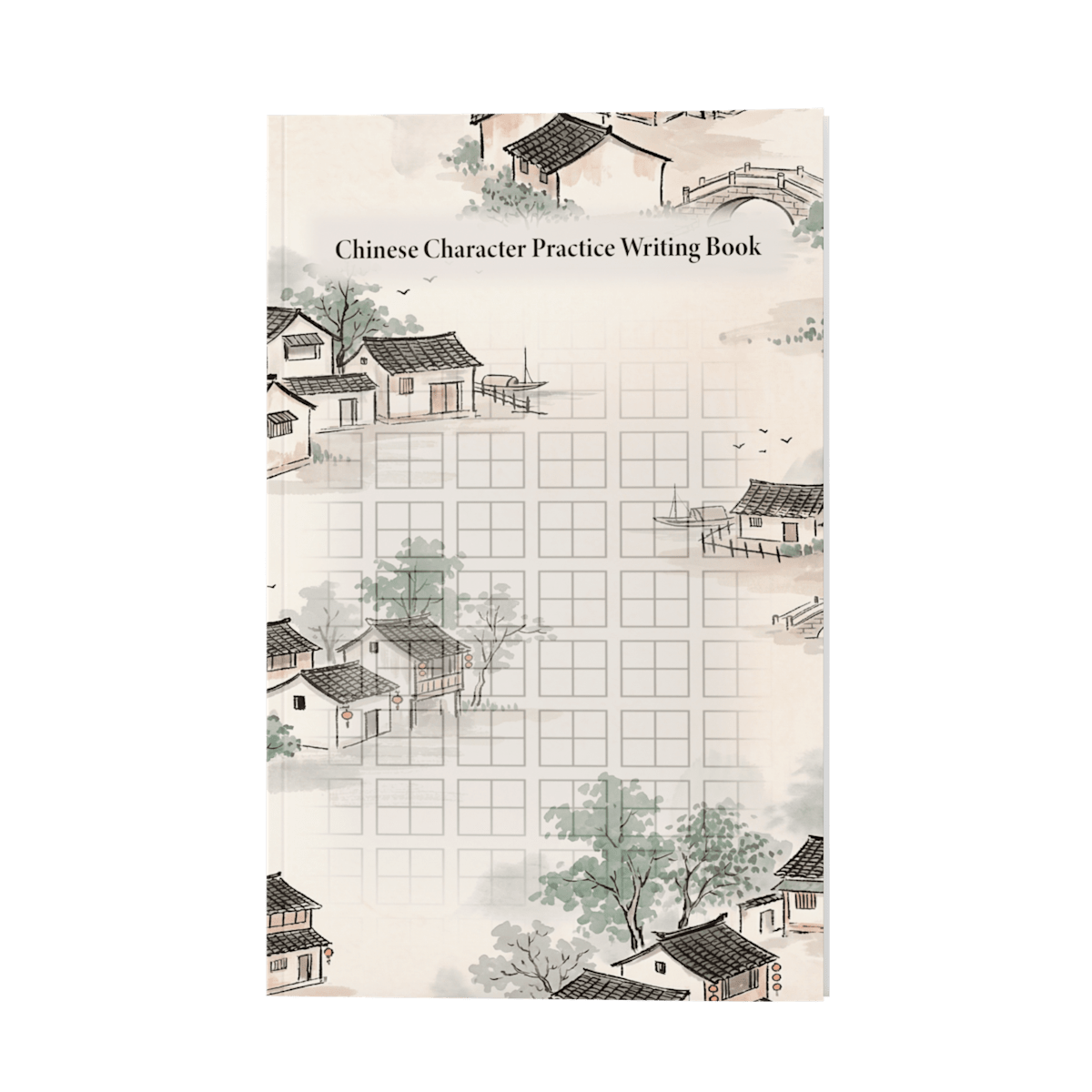
If you want an easy, distraction-free way to practice using Tianzi grids, you can take a look at this writing notebook here:
👉 https://nichenotespress.com/books/chinese-character-practice-writing-book
Below is a helpful video that explores practical methods for memorizing Chinese characters more effectively. While the video focuses on memory techniques, many of the methods directly support repetition-based handwriting practice.
This video is especially useful for learners who want to understand why repetition works and how to apply it more intentionally.


What you’ll learn from the video
This video covers several techniques that align well with structured writing practice, including:
- How repetition strengthens long-term memory
- Why breaking characters into components improves recall
- Methods for reviewing characters without overload
- How consistent exposure builds familiarity over time
When repetition is combined with handwriting — especially in a structured format — these memory techniques become even more effective. Writing characters repeatedly reinforces both recognition and physical recall, helping characters feel more natural to produce on the page.
How this connects to handwriting practice
Watching how repetition supports memory can make your writing practice more intentional. Instead of copying characters mechanically, you begin to understand why repeated writing leads to better retention, smoother stroke flow, and increased confidence.
This is exactly why short, focused repetition sessions tend to be more effective than long, unfocused study periods.